
SIN PARO
(In progress)
I started the Sin Paro documentary project in 2017 under the spell of the theme: human life, the passage of time, public space and reflection on “the right to the city” when we are elderly. Although demographic indices have for years pointed to the ageing of the world’s population, in contemporary behavior and dynamics, the elderly are often excluded and seen as burdens on the economic flow, forming part of that group of obsolete commodities in consumer society.
When I started photographing Sin Paro, I set myself the goal of taking portraits over a period of at least 10 years and then producing a photobook. A project that involves time needs time. Of course, I didn’t imagine that 2020 would bring us the Covid-19 pandemic, placing the elderly in the highest risk group and reinforcing the need for urgent reflection on well-being and the meanings attributed to the seniors of our time. Among the hard lessons the tragic pandemic has taught us, one of them is the importance of social interaction in our life expectancy and quality of life. There is still no more favorable and democratic space for this than the public space.
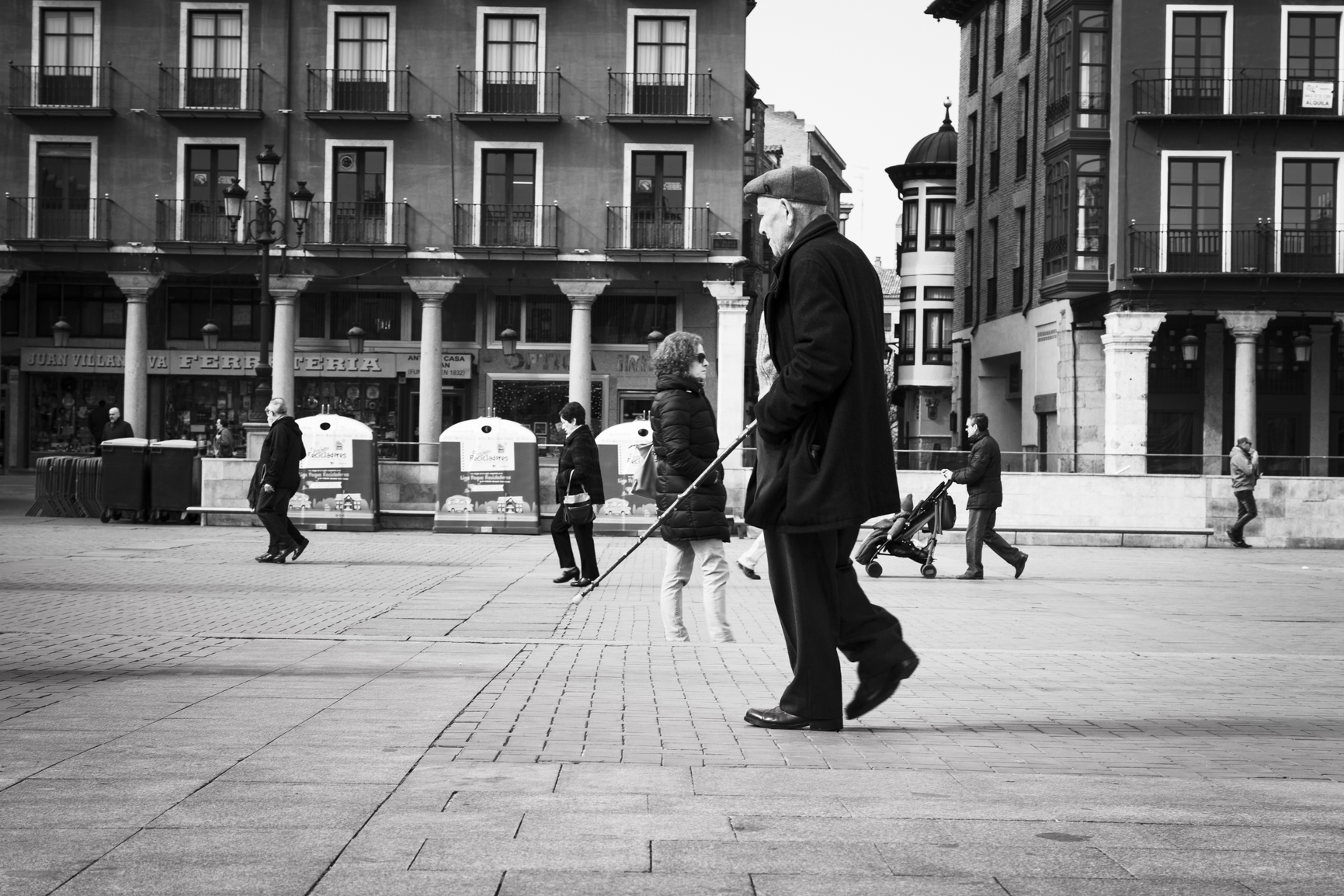
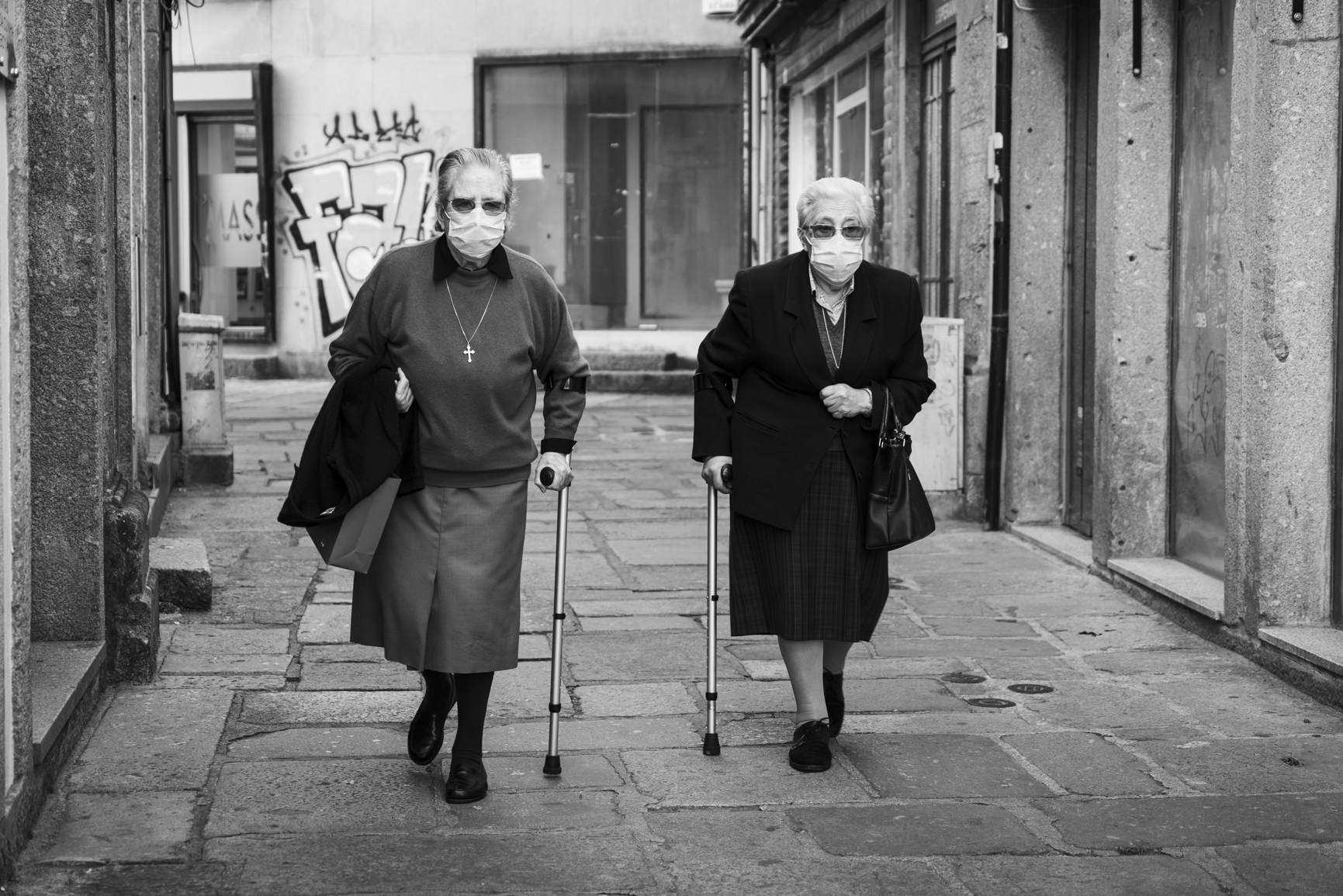
This project could have had many titles, but I chose “Sin Paro”, in Spanish, because I started it in Spain and because this “non-stop” observation of elderly people in the streets sensitizes me and stands out to me as a powerful manifestation of the desire to enjoy active living. The walking stick is a visual symbol of an inner movement that offers us the grace of walking. I believe that without elderly people on the streets, our society is impoverished and loses a powerful way of transmitting knowledge.
We’ve reached 2025 and so far, working on Sin Paro has allowed me to capture simple everyday scenes in more than 20 different cities between Spain and Portugal. Below are five of these portraits.



 christianbaes.art